
Article
The Power Bottleneck: How South African Data Centres Are Translating Cooling Efficiency Into Compute Revenue
South Africa’s Data Centre market is entering a new phase of growth. Cloud adoption, enterprise digital transformation, mobile connectivity, fintech, AI and the continued expansion of colocation infrastructure are all increasing demand for local compute capacity. Across South Africa, Nigeria and Kenya, combined IT load now exceeds 800 MW and continues to rise.
But in South Africa, every discussion about digital infrastructure eventually comes back to one constraint: power.
For Data Centre operators, Telcos, hyperscalers, banks, consultants and mechanical engineers, the question is no longer simply, “How do we cool the room?” The better question is, “How much of our provisioned facility power can we convert into revenue-generating compute?”
That shift is why the industry needs to look beyond traditional Power Usage Effectiveness, or PUE, and give greater attention to Power Compute Effectiveness, or PCE.
At TechAccess, we see this as one of the most important conversations in the South African Data Centre market today. In a region where grid constraints, long equipment lead times and rising rack densities are all shaping investment decisions, cooling efficiency is not just an engineering priority. It is a commercial strategy.
The limits of thinking only in PUE
PUE has been a valuable metric for the Data Centre industry. It helped operators understand how much energy was being used by the facility compared with the IT load. A lower PUE generally indicated a more efficient facility, and for many years that was the right conversation.But the market has changed.
Today’s Data Centres are being asked to support higher-density workloads, AI-driven applications, more demanding cloud platforms, edge deployments and increasingly complex enterprise environments. In South Africa, these demands are being placed on infrastructure that must also contend with constrained grid capacity, availability risks and a very practical question: how much power can actually be allocated to compute?
This is where PUE can become too narrow.
A facility may have a respectable PUE and still leave significant value on the table if too much of its available power is consumed by cooling infrastructure, inefficient airflow, outdated CRAC/CRAH designs or systems that cannot adapt to changing load profiles. In a power-constrained environment, that unused or poorly allocated capacity becomes stranded power.Stranded power is not just an engineering inefficiency. It is lost revenue potential.
Why PCE matters in South Africa
Power Compute Effectiveness reframes the discussion. While PUE measures facility efficiency, PCE measures how much of a Data Centre’s provisioned power is allocated to compute. In simple terms, PCE is Provisioned Power for Compute divided by Provisioned Total Data Centre Power.
PCE = Provisioned Power for Compute ÷ Provisioned Total Data Centre Power
In a power-constrained market, that distinction matters because every kilowatt used by cooling, fans, pumps or other non-compute infrastructure is a kilowatt that cannot be allocated to revenue-generating compute.
For C-level decision-makers, this matters because compute is what generates business value. Compute supports cloud services, customer applications, AI workloads, enterprise platforms, banking systems, telecom networks and digital services. Cooling is essential, but it is not the revenue engine.
When cooling consumes less power, more of the available electrical capacity can be allocated to IT load. That can mean more racks, higher densities, better utilisation of existing infrastructure, delayed or reduced capital expenditure on new power capacity, and stronger returns from existing facilities.
For consultants and mechanical engineers, PCE provides a more commercially relevant way to frame design decisions. It connects cooling architecture, airflow strategy, redundancy, controls, free cooling potential and future liquid-readiness to business outcomes that boards and investors understand.
In South Africa, where power availability can shape everything from site selection to expansion timelines, this is a critical shift.
Cooling efficiency as a revenue lever
Historically, cooling has often been treated as a cost centre. It was required to protect uptime, maintain environmental conditions and keep IT equipment operating safely.
That is still true, but it is no longer enough.
In a constrained power environment, cooling strategy directly affects revenue capacity. If a facility has a fixed power envelope, every kilowatt consumed unnecessarily by cooling is a kilowatt that cannot be sold as compute. This changes the financial model.
A more efficient cooling system can help operators:
Increase usable IT load within the same power allocation.
Support higher rack densities without overbuilding the room.
Extend the life of existing facilities.
Reduce mechanical cooling dependency where free cooling is viable.
Improve resilience and environmental control.
Create a clearer path from legacy CRAC/CRAH environments to hybrid or liquid-ready infrastructure.
- Improve return on invested capital.
This is particularly relevant for colocation and telco environments, where capacity utilisation, speed to deployment and customer density all influence commercial performance.
Bridging legacy infrastructure and high-density demand
Across sub-Saharan Africa, traditional room-level DX and chilled water perimeter units remain common. In many facilities, CRAC and CRAH systems are still the dominant cooling technologies. These systems will continue to play an important role, especially in existing Data Centres, server rooms, edge sites and telco environments.
However, the market is moving quickly. Higher-density racks, AI workloads and more complex customer requirements are placing new demands on infrastructure originally designed for lower thermal loads.
This does not mean every facility must immediately move to full liquid cooling. The practical path for many South African operators will be phased, hybrid and commercially disciplined.
That is why TechAccess is focused on helping clients bridge the gap between today’s installed base and tomorrow’s high-density requirements. The objective is not to replace infrastructure for the sake of replacing it. The objective is to design cooling strategies that unlock capacity, reduce energy waste and prepare facilities for future demand.
Where Airsys PowerOne™, Optima and ChillRow direct expansion and Liquid Cooling options fit in.
Our partnership with Airsys gives TechAccess access to a broad portfolio of mission-critical cooling technologies designed for the next phase of Data Centre growth in the region.
Airsys PowerOne™ architecture is particularly relevant because it aligns directly with the PCE conversation. It is not simply about cooling a room more efficiently. It is about enabling a higher proportion of provisioned power to support compute. For operators dealing with power constraints, that distinction matters.
PowerOne brings together a platform approach to high-density cooling, supporting the transition from conventional air-cooled environments toward more adaptive, scalable and liquid-ready infrastructure. For AI-focused deployments, hyperscale environments and future high-density colocation requirements, this type of architecture helps operators plan beyond today’s load profile.
The Airsys Optima and Optima2 series also plays an important role for the South African market. Optima precision air conditioning systems are well suited to mission-critical environments that require accurate temperature and humidity control, reliability and flexible heat-rejection options. For many facilities, especially those operating at room level with DX or chilled water systems, Optima provides a practical path to improved efficiency without forcing a complete redesign of the Data Centre.
With configurations that can support different site requirements, including 400V/3/50Hz power environments, Optima is highly relevant to regional infrastructure needs. It provides a way to modernise precision cooling while supporting the operational realities of Data Centre, telco and enterprise environments across South Africa and the broader region.
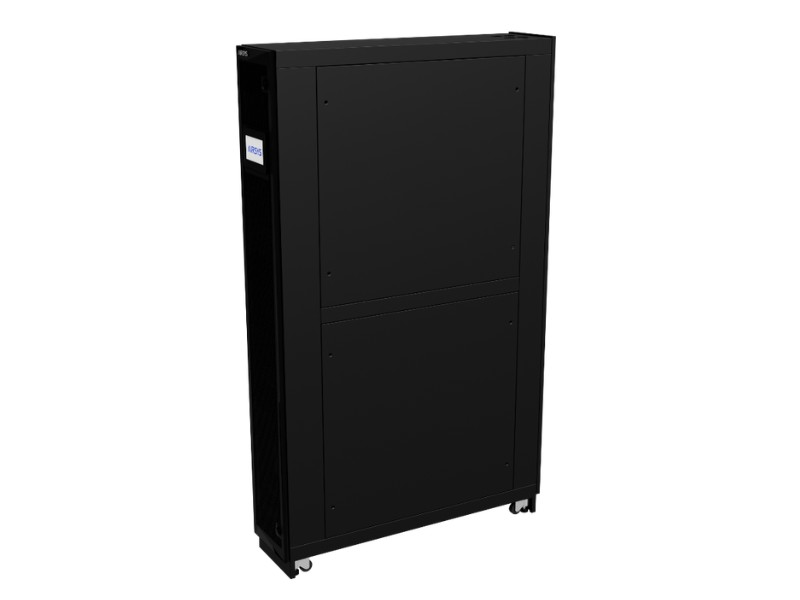
Airsys ChillRow™
Row based cooling further enhances efficiency, along with containment, either Hot (HACS) or Cold Aisle (CACS) :
Save up to 40% in cooling energy costs
Eliminate Data Centre hot spots
Eliminate hot and cold air mixing
Increase rack quantity (scalability)
Boost equipment / Data Centre up-time
In row units are installed adjacent to the server cabinets and directly cool at the heat source via independent refrigeration systems. High Density heat can effectively be targeted by the horizontal supply arrangement of the ChillRow units, increasing capacity and efficiency of the overall cooling systems.
Lead time matters
Technology selection is only part of the challenge. Delivery time is another.
Many operators in Africa face long lead times for critical Data Centre infrastructure. That can delay projects, slow down customer onboarding and create real commercial risk. In a fast-moving market, the ability to deploy the right cooling solution quickly is a competitive advantage.
This is one of the reasons TechAccess is excited about the Airsys partnership. Airsys brings a wide product range, strong R&D capability and manufacturing agility that helps address the long lead times typical of many other vendors.
For customers, this means the conversation can move faster from design to deployment. For consultants, it creates more flexibility when designing around real-world project timelines. For Data Centre managers, it supports more responsive upgrades and expansions as demand evolves.
The regional opportunity
Demand for Data Centre cooling in sub-Saharan Africa is growing rapidly, with South Africa, Nigeria and Kenya leading the market. Growth is being driven by cloud expansion, telecom demand, fintech, banking, government digitalisation, media, retail, healthcare and enterprise IT requirements.
The IT and telecommunications sector remains the primary driver, while BFSI continues to play a major role as banks, insurers and fintech platforms invest in secure, resilient and compliant infrastructure. Colocation facilities are also becoming increasingly important as more organisations choose to access high-quality Data Centre capacity rather than build and operate their own environments.
As rack densities increase, we expect to see growing adoption of advanced cooling technologies, including economisers, AI-based controls, rear-door heat exchangers, selective direct-to-chip deployments and hybrid architectures that combine the strengths of air and liquid cooling.
The direction of travel is clear: more compute, higher density, better efficiency and greater pressure to maximise every available megawatt.
TechAccess From cooling rooms to unlocking value
For South African Data Centre leaders, the next competitive advantage will not come only from building more space. It will come from making existing and future infrastructure work harder.
That means understanding where power is being lost, modernising cooling systems that consume more than they need, designing for future densities and looking at energy not only as a utility cost, but as a capacity asset.
PUE will remain important, but it should not be the only metric guiding decisions. PCE gives operators, executives and consultants a sharper way to connect engineering strategy to financial performance.
At TechAccess, we see this as a practical market need. South African Data Centres require cooling strategies built around local power constraints, rising density requirements and the commercial pressure to make every available megawatt work harder. Through our partnership with Airsys, we are helping bring those capabilities to market across South Africa and the broader sub-Saharan African region.
The goal is simple: help Data Centres use less power for cooling, allocate more power to compute and turn constrained capacity into measurable business value.
In a market where every megawatt matters, cooling efficiency is no longer just about operational performance. It is about compute revenue.
For more information, visit: https://techaccess.co.za/airsys-techaccess/
